For students
Spend your revision time on argument, not on remembering whether it was 1789 or 1791.
GCSE, A-Level and university history all reward evaluation, context and comparison over rote recall. But you can't evaluate a sequence of events if you're not sure of the sequence. TimeToTime builds a connected timeline of your course, and keeps the dates in it automatic, so essays, source questions and revision sessions move faster.
The problem isn't that you don't understand history
It's that constantly stopping mid-thought to work out what happened first interrupts the analysis you're actually being marked on. Modern history teaching is right to emphasise causes, consequences, change and continuity over rote memorisation — but those arguments still need a chronology to stand on. If you have to look it up every time, you lose momentum, and in an exam, you lose marks.
Automatic recall doesn't replace understanding. It frees up the working memory you need for it — for placing evidence in context while reading, comparing interpretations, and writing with precision instead of hedging on dates.
Connections do the heavy lifting
Link a cause to its consequence, or an event to the historiographical debate around it, and you're not just memorising two facts — you're building the kind of causal map that essays are made of. Each connection becomes a second way back to the date if the first one fails you.
Read: Evaluating Arguments — Why Chronology Is the Foundation of Perspective →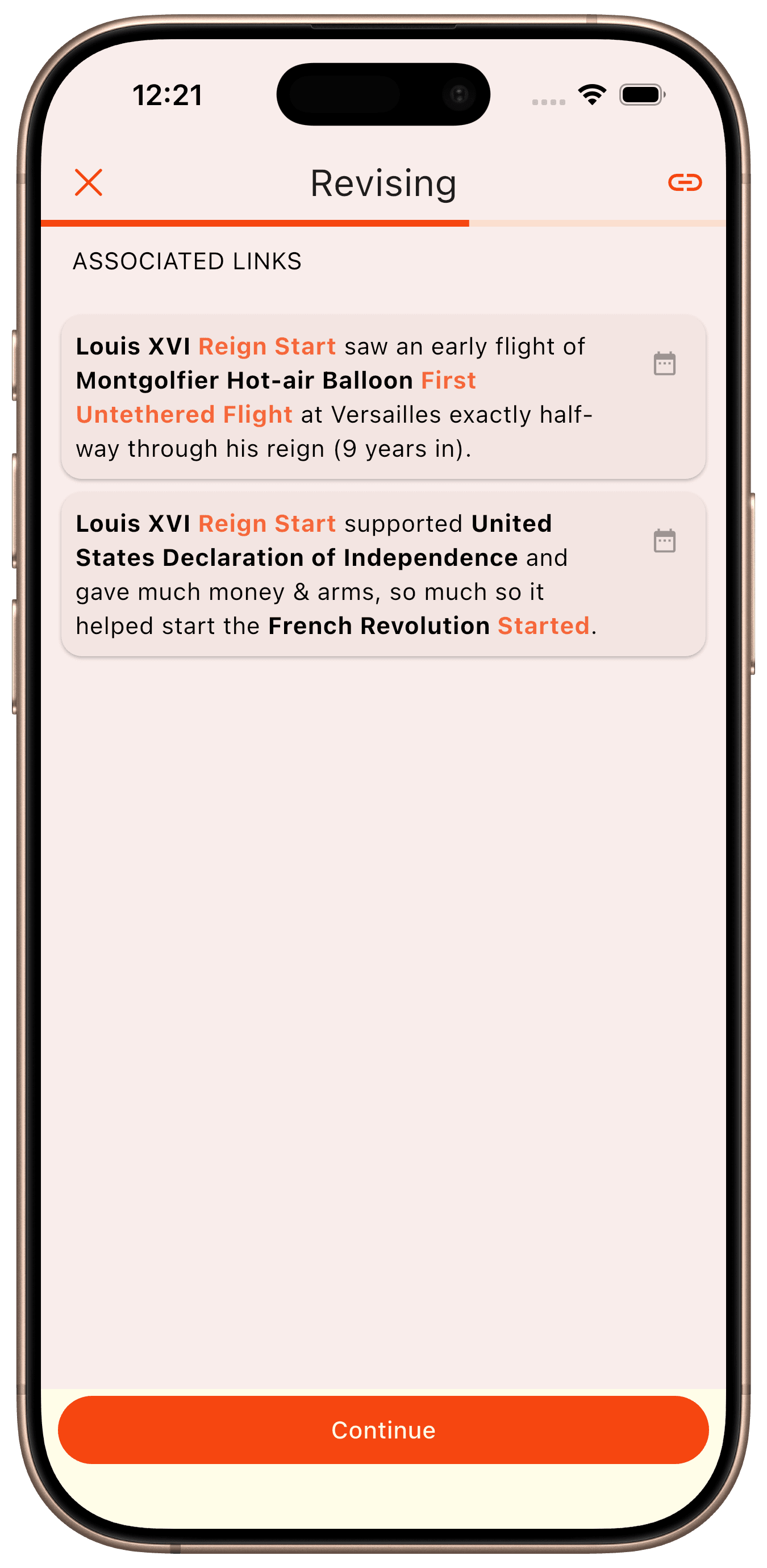
How it works for a course
1. Build
Create a deck for a course, topic or exam board, or subscribe to one already published in the Gallery.
2. Connect
Link causes to consequences, and events to the arguments they support, using the Link feature.
3. Learn
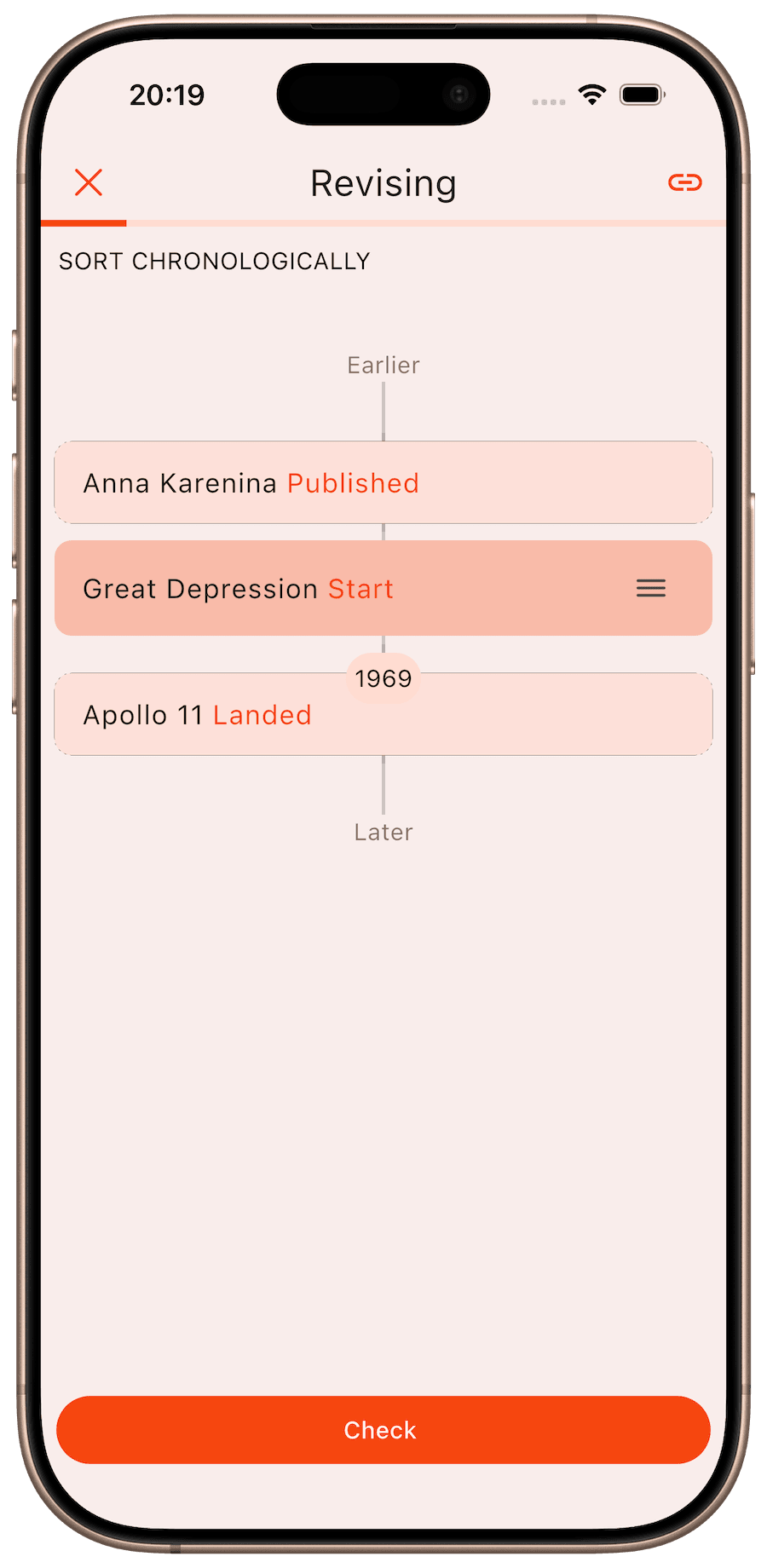
New dates are introduced gradually and tested both in context (before/after/between) and directly.
4. Remember
Spaced repetition schedules review just before you would forget, so revision stops being a last-minute scramble.
5. Explore
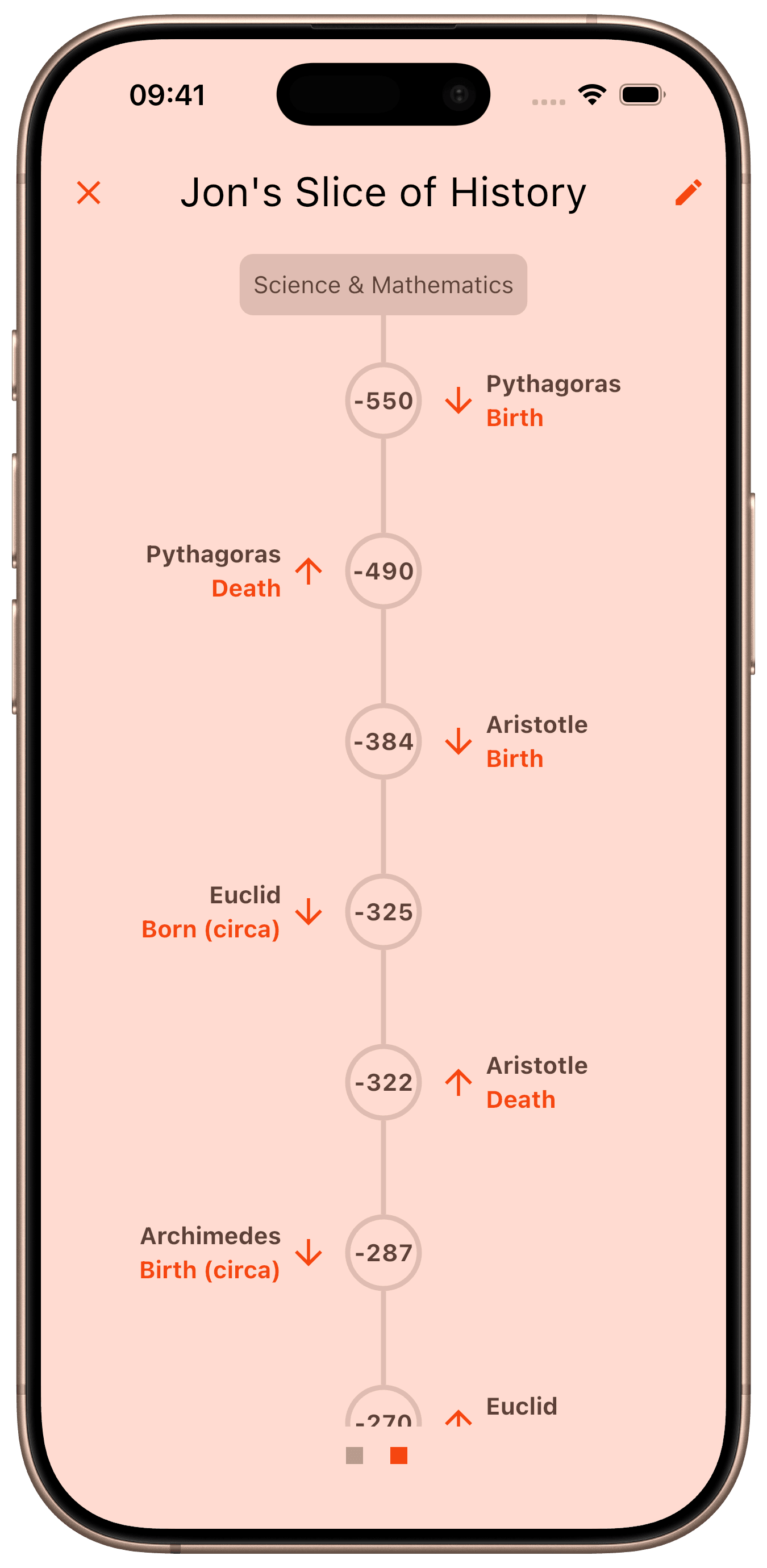
Visual timelines let you compare periods, exam topics, or regions side by side while you revise.