For history enthusiasts
You know more history than you can place in order.
Years of books, documentaries and podcasts leave you with a rich sense of who Napoleon was, or what the Reformation involved — and a much weaker sense of exactly when, or how that lines up with what was happening somewhere else at the same time. TimeToTime turns that reading into a durable, connected timeline.
Reading builds knowledge. It doesn't always build order.
Dates you read once fade surprisingly quickly, even when the story around them stays vivid. Worse, events from different countries and centuries are hard to position relative to each other unless something forces the comparison. The result: a large, loosely connected collection of historical facts, without much of a map to put them on.
You don't need to memorise history for an exam. But being able to place events reliably — relative to each other, and in time — makes everything you read afterwards easier to understand, because it has somewhere to go.
Turn isolated facts into a network
Every time you connect a new event to one you already know — because they happened nearby, because one caused the other, or simply because you read about them in the same week — TimeToTime keeps that relationship. Over time, your reading stops being a pile of facts and becomes a network you can navigate.
Read: Connecting Regions and Eras →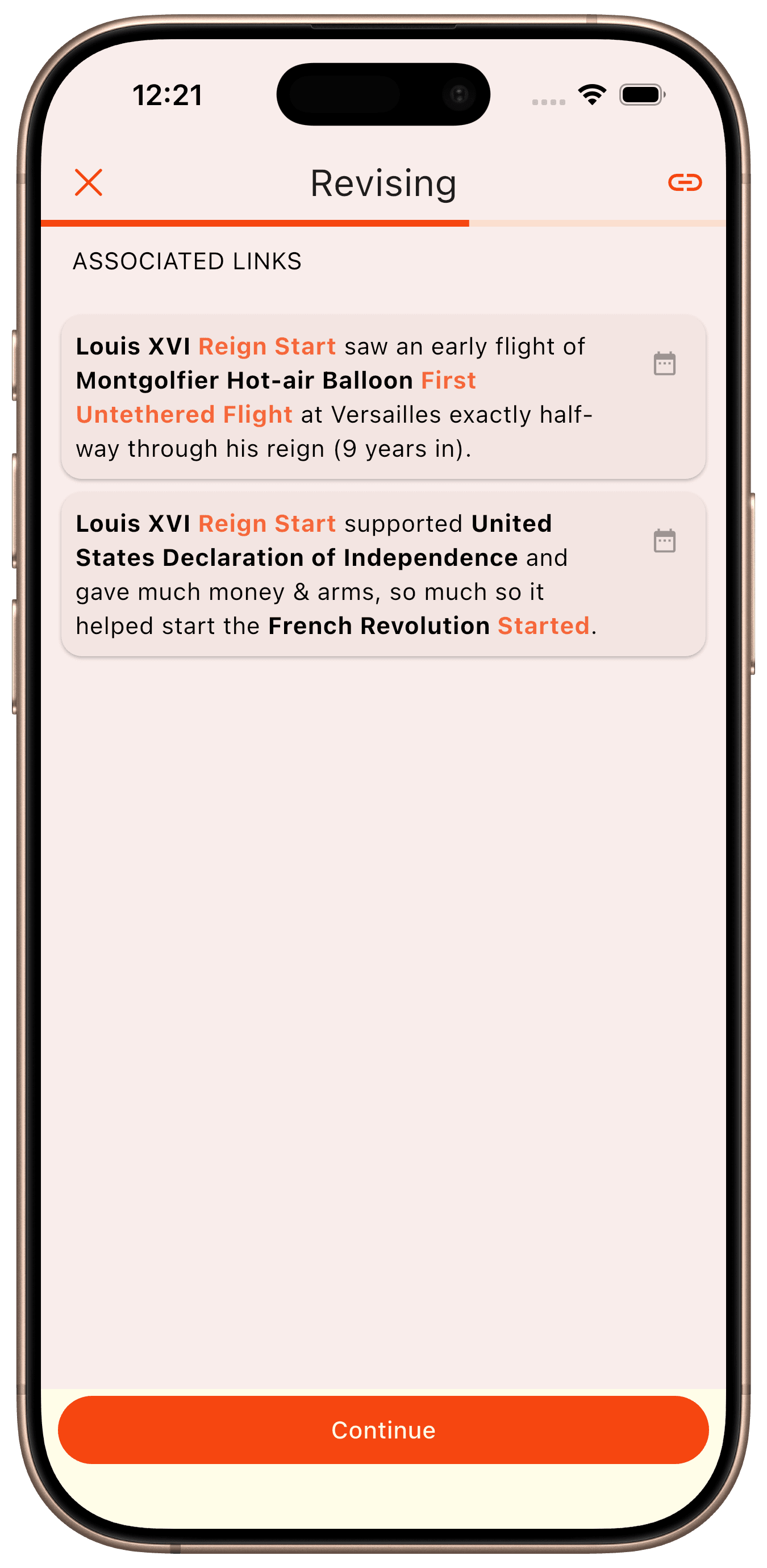
How your reading becomes a timeline
1. Build
Add events as you read — a biography, a podcast, a documentary, a museum visit. A short description is enough to start.
2. Connect
Link what you find to what you already know, so a new fact from one book joins the same map as everything else you have read.
3. Learn
Gentle, repeated exposure gets you acquainted with a new date before it is tested seriously.
4. Remember
Spaced repetition keeps old reading available, so a fact from a book you read two years ago stays retrievable.
5. Explore
Browse the growing timeline to see how periods, regions and centuries actually overlap.
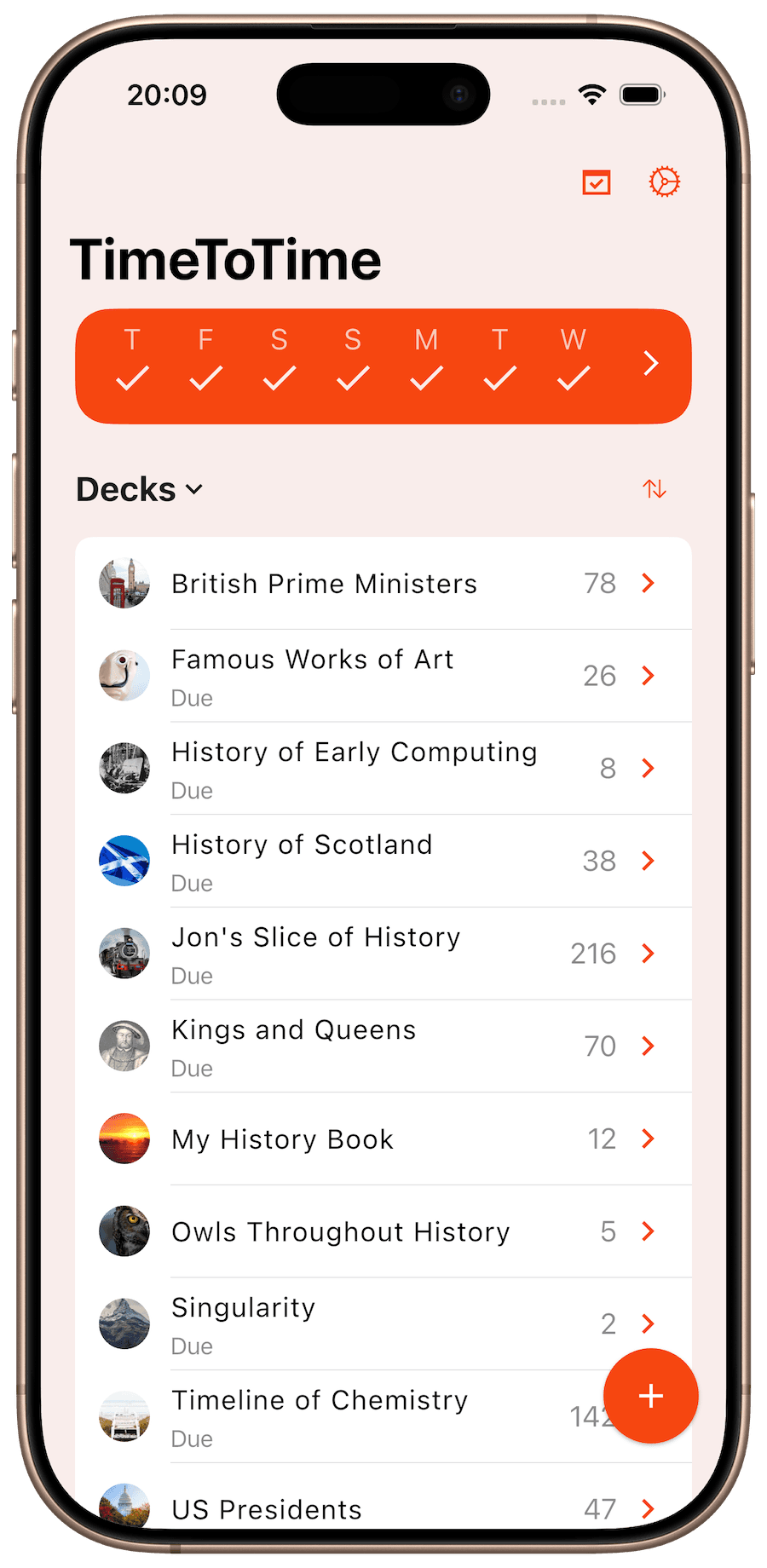
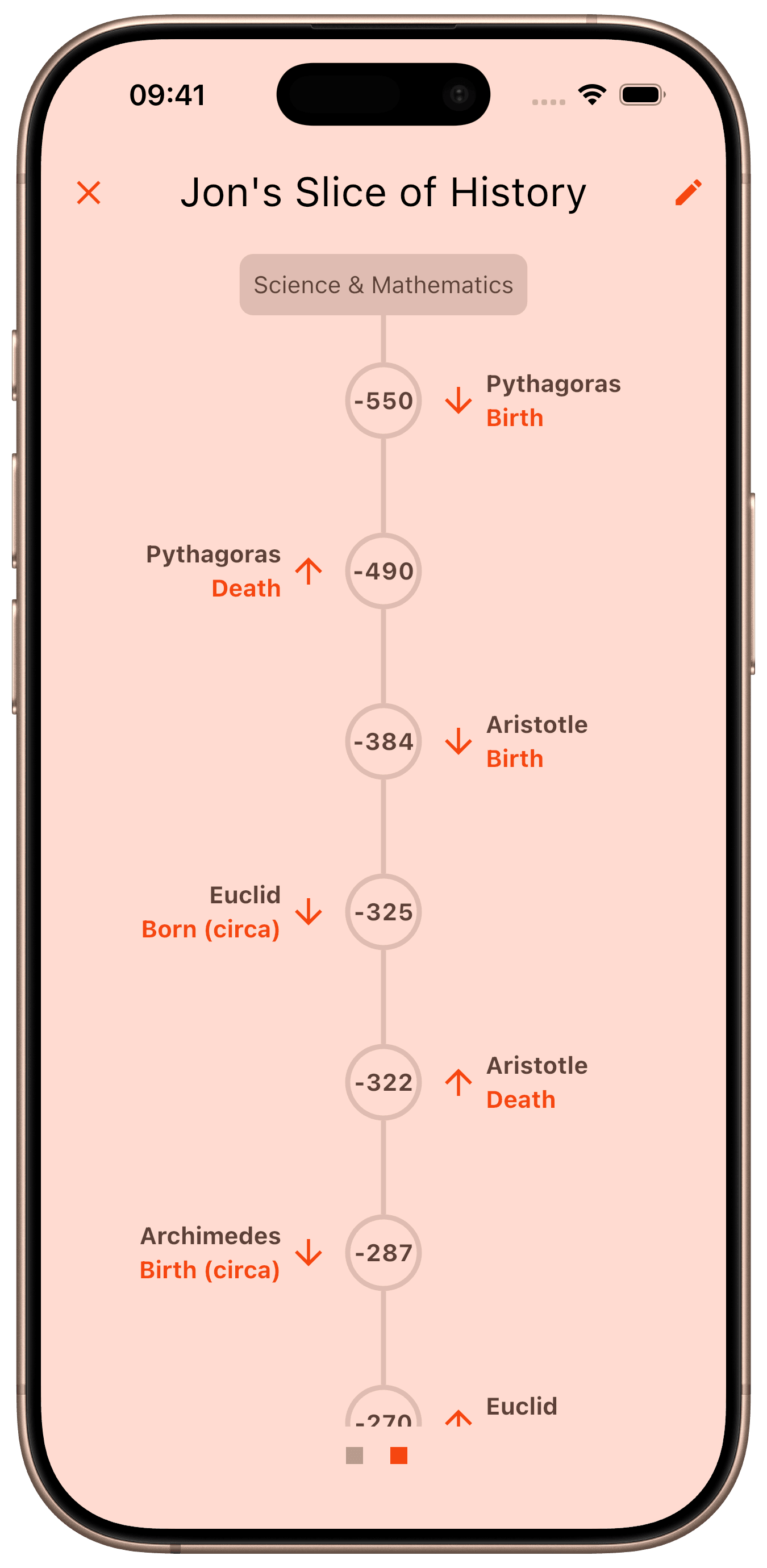
Timelines built by other enthusiasts
Jon's Well-Connected History
Important dates throughout Western civilisation, linked into one connected timeline.
View deck →Ada Palmer's Inventing the Renaissance
A deck built around a specific historical argument and reading.
View deck →Famous Works of Art
A single representative work per artist — a timeline built from a personal interest.
View deck →